
Complete Transaction Records
Maintain sales, purchases, receipts, payments and journal activity within a consistent accounting structure.
Bring accounts, sales, purchases, vouchers, inventory-linked entries and financial statements into one controlled accounting environment.
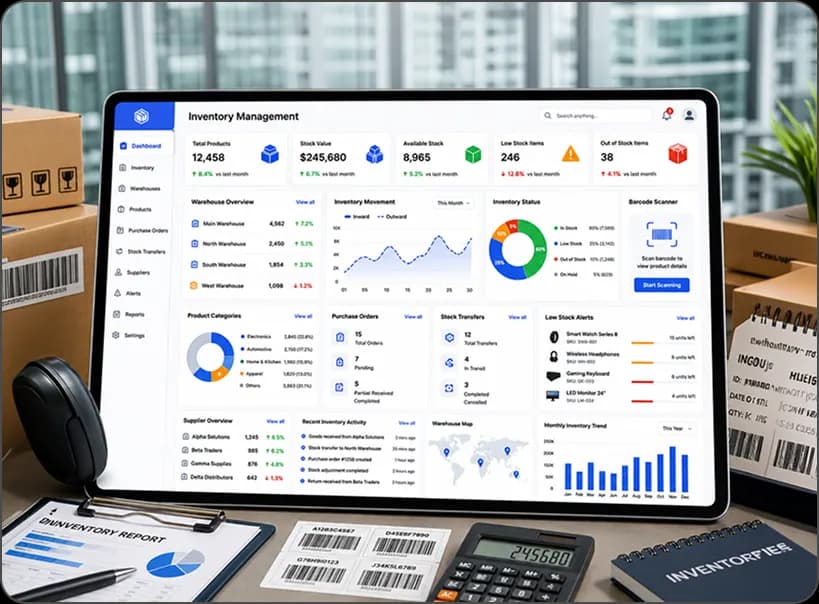
Every sale, purchase, payment and stock movement affects the financial position of a business. A structured accounting system keeps these records connected, reduces manual gaps and provides a clearer basis for financial and tax reporting.
Maintain sales, purchases, receipts, payments and journal activity within a consistent accounting structure.
Transfer relevant sales and purchase activity to the appropriate ledgers without repeating the same entries.
Review account balances, daily transactions and financial statements across defined reporting periods.
Accounting brings together the records, transaction processes and financial reports required to maintain an organised view of business activity.
Manage multiple companies, charts of accounts, account groups and opening balances through a controlled structure.
Maintain customer, vendor, item, service, unit, price and applicable tax information for use across transactions.
Record quotations, deliveries, sales invoices, credit notes and customer receipts while maintaining the corresponding sales register.
Manage purchase orders, goods receipts, purchase invoices, debit notes and vendor records through defined transaction processes.
Record journal, payment, receipt and contra vouchers, with relevant sales and purchase entries posted to the appropriate ledgers.
Review the trial balance, profit and loss statement, balance sheet, day book and transaction registers for selected periods.
Set up the company, chart of accounts, ledger groups, opening balances, currencies and document number series required for financial recordkeeping.
Capture sales, purchases, receipts, payments, stock-related transactions and adjustments against the relevant customers, vendors, items and accounts.
Post transaction activity to the appropriate ledgers and review account movements, daily entries and period balances.
Generate trial balances, profit and loss statements, balance sheets, registers and other reports required for financial review.
Invoice Management provides the structure tax authorities need to standardise invoice records, maintain reliable transaction data and review activity across registered organisations.
Maintain separate accounting records for multiple companies through one controlled login environment.

Maintain connected records across the main accounting and transaction areas used throughout the business cycle.
Approved feedback from organisations and government stakeholders on financial record consistency, transaction control and reporting.
“The platform has modernized our accounting processes with automated ledger postings, financial reporting and secure document management.”
Enterprise Holdings Ltd.
“Month-end closing is faster and more accurate thanks to the integrated accounting workflows and automation features.”
Corporate Finance Group.
“Managing multiple companies, currencies and accounting records is now effortless through one unified platform.”
International Business Group
Important considerations around company structures, transaction processing, ledger posting, user access and financial reporting.
The platform supports charts of accounts, opening balances, customer and vendor records, sales, purchases, vouchers, ledger posting, financial statements and transaction registers within one accounting environment.
The platform supports charts of accounts, opening balances, customer and vendor records, sales, purchases, vouchers, ledger posting, financial statements and transaction registers within one accounting environment.
The platform supports charts of accounts, opening balances, customer and vendor records, sales, purchases, vouchers, ledger posting, financial statements and transaction registers within one accounting environment.
The platform supports charts of accounts, opening balances, customer and vendor records, sales, purchases, vouchers, ledger posting, financial statements and transaction registers within one accounting environment.
The platform supports charts of accounts, opening balances, customer and vendor records, sales, purchases, vouchers, ledger posting, financial statements and transaction registers within one accounting environment.
The platform supports charts of accounts, opening balances, customer and vendor records, sales, purchases, vouchers, ledger posting, financial statements and transaction registers within one accounting environment.